The Process & Philosophy
Discover the mindful journey from raw clay to finished piece, and the philosophy that guides our practice.
Our Philosophy
At the heart of our studio lies a deep respect for the process itself. We believe that working with clay is not merely about creating objects, but about cultivating a relationship with the material, with yourself, and with the present moment.
Our approach is grounded in the understanding that the journey matters as much as the destination. Each stage of working with clay offers opportunities for learning, growth, and self-discovery.
We embrace the Japanese concept of wabi-sabi—finding beauty in imperfection, impermanence, and incompleteness. In our studio, a crack in a piece isn't a flaw to be hidden, but a mark of the piece's unique story.
This philosophy extends beyond the studio walls, teaching us to approach life with greater acceptance, curiosity, and appreciation for the imperfect beauty that surrounds us.
The Journey of Clay
Wedging
The process begins with wedging—kneading the clay to remove air bubbles and create a uniform consistency. This rhythmic, repetitive motion naturally calms the mind and prepares both you and the clay for the work ahead. It's a physical meditation that grounds you in the present moment.
Centering
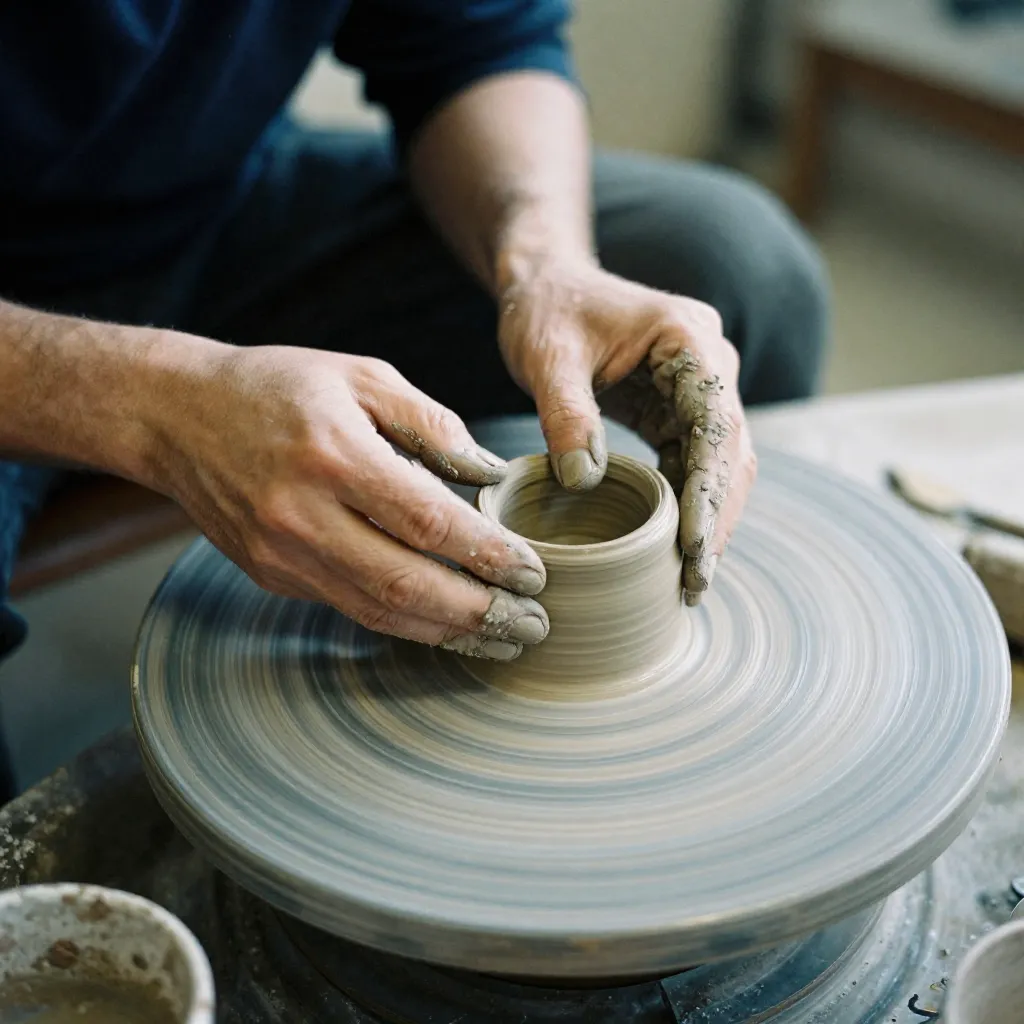
Centering clay on the wheel is perhaps the most meditative stage. It requires complete focus and presence. As you learn to center the clay, you simultaneously learn to center yourself. The clay teaches you about balance, patience, and the power of gentle, consistent pressure.
Throwing
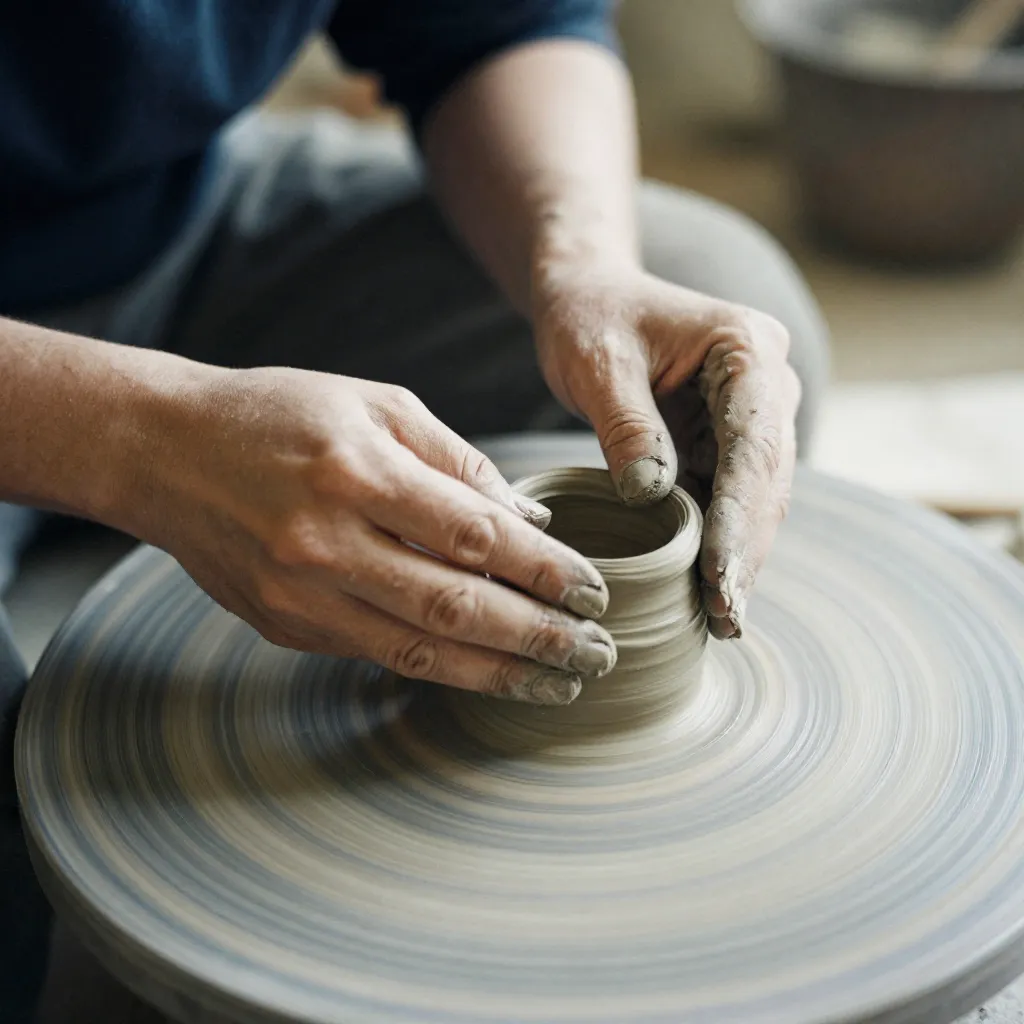
Shaping the clay on the wheel demands your full attention. Your hands must work in harmony with the spinning motion, responding to the clay's feedback in real-time. This stage cultivates a flow state where time seems to dissolve, and you become one with the material and the moment.
Trimming
Once the piece has dried to leather-hard, trimming refines its form and removes excess clay. This stage requires precision and patience, teaching you to work with the material's current state rather than forcing it. It's a practice in acceptance and careful attention to detail.
Firing
The first firing, called bisque firing, transforms the clay into ceramic. This stage requires trust and patience—you must let go and allow the kiln to do its work. The waiting period becomes part of the practice, teaching you to release attachment to immediate results.
Glazing
Applying glaze is an act of intention and care. Each brushstroke is an opportunity to be fully present. The glazing process invites you to slow down, to notice the texture and color, and to appreciate the transformation taking place. It's a mindful practice in itself.
Final Firing
The final firing completes the transformation. When you open the kiln, you discover what the fire has created—often something different from what you expected, yet beautiful in its own way. This moment teaches acceptance and appreciation for the unpredictable nature of the creative process.
Embracing Imperfection
The Beauty of Wabi-Sabi
Wabi-sabi is a Japanese aesthetic that finds beauty in imperfection, impermanence, and incompleteness. In our studio, we embrace this philosophy wholeheartedly.
A piece that cracks during firing isn't discarded—it becomes a unique work of art, telling the story of its creation. A glaze that runs unexpectedly creates patterns that couldn't be planned. These "imperfections" are actually marks of authenticity and character.
This approach teaches us to let go of perfectionism and embrace the natural flow of the creative process. It's a powerful lesson that extends far beyond the studio, helping us find peace with the imperfect nature of life itself.
Sustainable Practices
Responsible Sourcing
We source our clay from suppliers committed to sustainable mining practices. We prioritize local materials when possible, reducing transportation impact and supporting regional economies.
Clay Recycling
All unused clay and trimmings are collected and recycled. We have a comprehensive system for reclaiming clay, ensuring that nothing goes to waste. This practice also teaches us about the cyclical nature of materials and processes.
Energy Efficiency
Our kilns are modern, energy-efficient models that minimize electricity consumption. We schedule firings to maximize kiln capacity, reducing the number of firings needed and our overall energy footprint.
The Meditative State
At each stage of working with clay, there's an opportunity to enter a meditative state—a flow where your awareness is fully present, your movements are intentional, and your mind is calm and focused.
This state isn't something you force; it emerges naturally when you engage fully with the material and the moment. The clay becomes your teacher, guiding you back to presence whenever your mind wanders.
This is the true gift of mindful clay work: not just the pieces you create, but the inner peace and clarity you cultivate along the way.